
The job isn't to run the room. It's to make the room safe enough to be honest in.

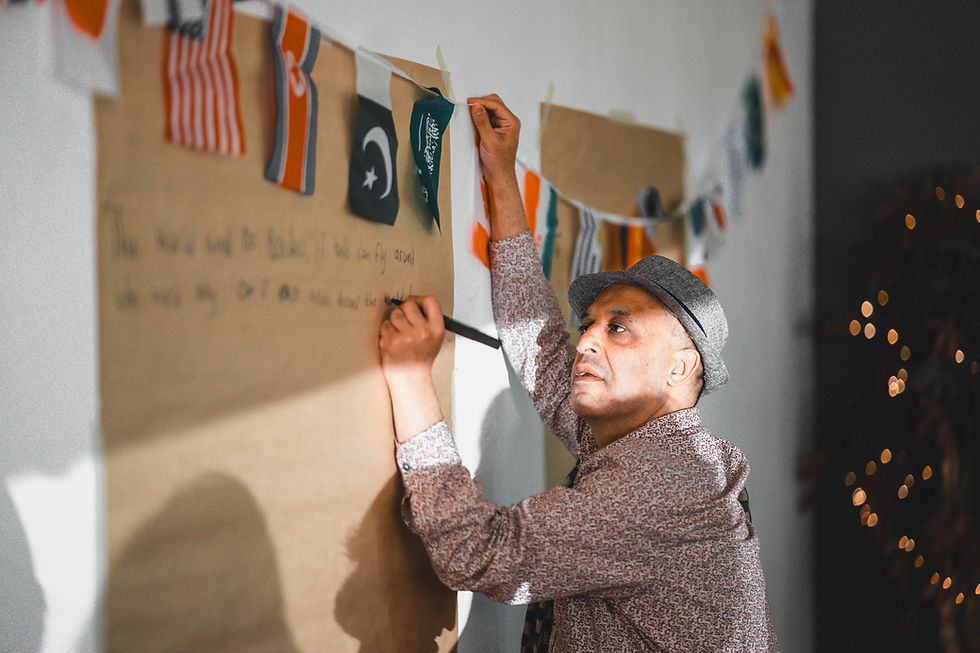
People sometimes ask me what facilitation actually involves, as if it's mostly about timing an agenda and handing out sticky notes. I understand why it looks that way from the outside. But the real work of facilitation, the work that actually matters, happens in the thirty seconds before anyone says anything difficult. It happens in whether a person decides, in that pause, that it's safe enough to tell the truth in this room, or whether they decide it isn't and quietly give you the answer they think you want instead.
I've facilitated a lot of spaces now, co-production workshops, sounding boards, sessions where people are talking about their own experience of being sectioned, or excluded, or not believed. And the thing I've learned, slowly and sometimes the hard way, is that a facilitator's job is not to keep things moving. It is to notice. To notice who hasn't spoken in twenty minutes. To notice the person who laughed at something that wasn't funny because that's what they do when they're uncomfortable. To notice when the room has quietly agreed to avoid the real issue because it's easier than sitting with it.
A well run agenda and a well held room are two completely different achievements, and only one of them actually changes anything.
There's a kind of facilitation that's really just project management with a different name. Keep to time, cover the items, produce the outputs. I've done that version too, and there's a place for it. But the facilitation I care about most is the kind where you are actively building the conditions for honesty, especially honesty from people who have learned, often through hard experience, that honesty in professional spaces gets punished rather than welcomed. If you've been in and out of services your whole life, you know exactly what happens when you say the wrong thing to the wrong person at the wrong time. So why would you say it to a stranger holding a clipboard, just because they asked nicely?
That's the actual skill. Not the warm up game, though those matter too. It's building enough trust, quickly enough, that someone is willing to risk something in front of people they've just met. And you can't fake that. People can tell, almost instantly, whether you're facilitating because you genuinely want to hear what they think, or because you need their input to tick a box on a funding report. The room knows. It always knows.
I think about silence a lot in this work. Most facilitation training treats silence as a problem to be managed, something to fill before it gets awkward. I've come to see it almost the opposite way. Silence is often where the real thinking is happening. Especially for people who've been talked over their whole lives, silence might be the first moment in a long time where nobody's rushing them. If you fill that silence too quickly because it makes you uncomfortable, you've just told that person, without meaning to, that their pace isn't welcome here either.
Sometimes the most useful thing a facilitator can do is absolutely nothing, on purpose, for slightly longer than feels comfortable.
And facilitation, properly done, has to include being willing to slow down or even abandon your own plan. I've walked into rooms with a beautifully designed agenda and watched it become completely useless within the first ten minutes, because the group needed something the plan hadn't accounted for. Maybe grief showed up unexpectedly. Maybe anger that had been building for years finally found an audience. A good facilitator holds the plan loosely enough to let the room tell you what it actually needs, even when that's inconvenient, even when it means you don't get through everything on the agenda.
None of this is really about technique, in the end. It's about whether you actually believe the people in front of you have something worth hearing, even when it's uncomfortable, even when it complicates the neat conclusion you were hoping to reach. If you believe that, the room tends to feel it. And if you don't, no amount of clever facilitation tools will cover for it. The room will feel that too.

Comments